The best things at IFA Berlin this year were not for sale. They were behind folding tables, demonstrated by three people who had flown in with the product in a suitcase, and in most cases you still cannot buy them. Blazon's founders spent 4 and 5 September walking the show. What follows is what was actually worth seeing, from people who launch consumer hardware for a living rather than review it.
IFA is the oldest consumer electronics show in the world and it has a split personality. Half of it is a wall of televisions, washing machines and phone cases, most of it already shipping and much of it already discounted. The other half is a few hundred startups with finished products and no launch behind them, which is a room we find almost unreasonably interesting.
The espresso machine that reads the bag
Two Austrian designers, Christoph Konheisner and Nikolaus Potapow, founded datum.coffee last year and spent the show pulling shots for anyone who slowed down. The machine is the least interesting thing they have built.
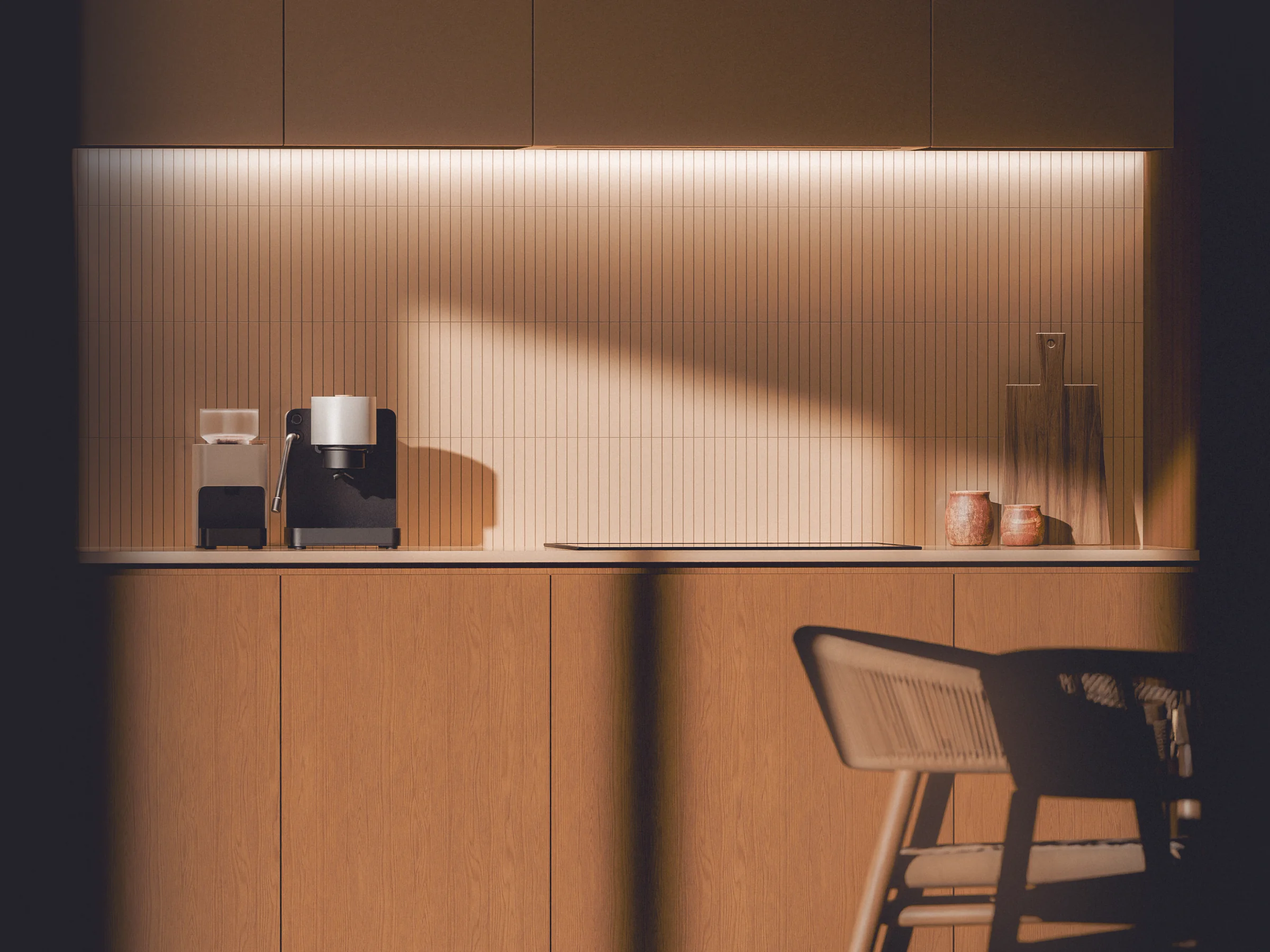
You photograph the label on a bag of beans. The app recognises the coffee, pulls the recipe the roastery themselves saved for it, and pushes grind size, dose, temperature, pressure and flow straight into the grinder and the machine. It weighs and tamps on its own. You press one button and get the shot the roaster intended, rather than the shot you can manage before eight in the morning.
The interesting decision is that it is open. No proprietary pods, no exclusive roasteries, no locked-in system. Any roaster can publish a recipe and any owner can edit one. That is a harder business to build and a much easier one to love, and it is exactly the kind of decision a board quietly reverses in year three. We hope this one survives.
It is about $1,300 against a list price of about $1,600, and there is a $3 pass on their site that holds your place in the queue before the Kickstarter opens later this year. Remember that $3, because it is the most important number in this article and it comes back.
The box that uses your computer for you
One table along, BVIO Technology were demonstrating Violoop, which sounds like vapourware right up until you watch it work.
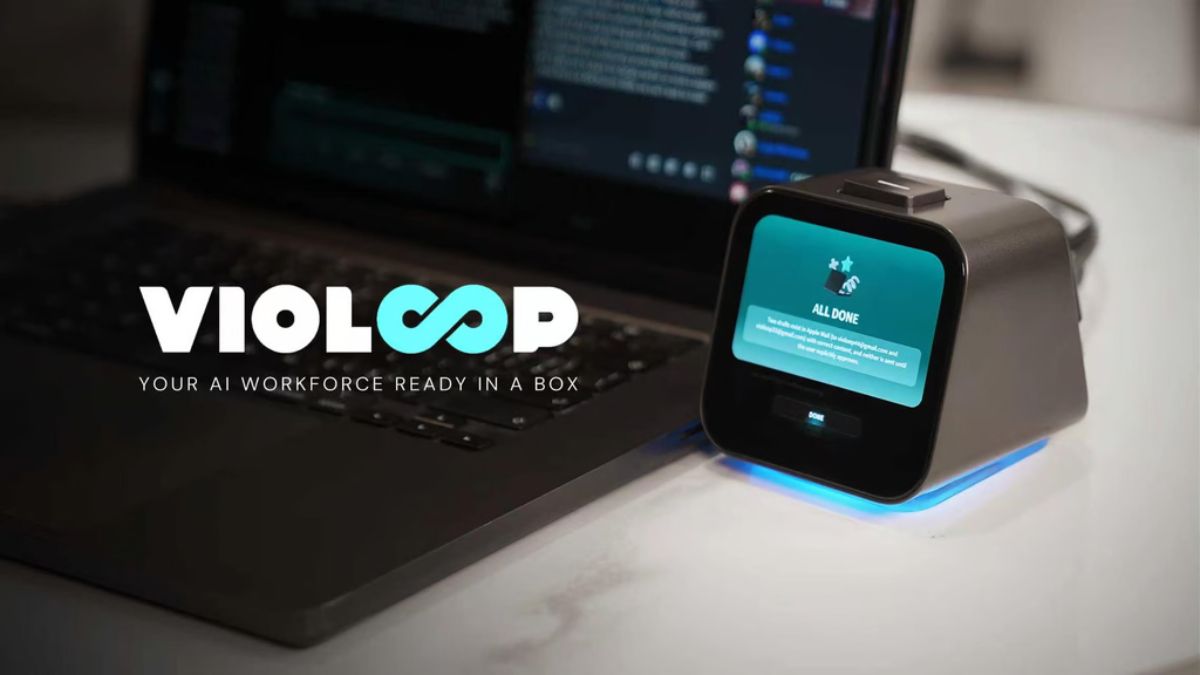
It is a cube, about 90mm square and 450g, that plugs into a computer you already own over HDMI and USB-C. It reads what is on the screen, works out the context, and then drives the machine: browsers, spreadsheets, a CRM, some internal tool written in 2011 whose source code nobody can find any more. It is trained on roughly 200 applications and 10,000 real screens, it runs on Windows, macOS and Linux, and the screen never leaves the device.
There is a physical button on top. You press it to approve anything sensitive or irreversible. A hardware key for the moment an agent is about to do something you cannot undo is genuinely good product thinking, and it is the sort of idea that only arrives after you have watched a room full of strangers get nervous during a demo.
BVIO raised a $20M seed before any of this was public. The Kickstarter opened ten days after the show at $399 for the super early bird against an expected $699 retail. Before that, a $10 refundable deposit held your tier.
Two companies, one playbook, and they had never met
Neither team had spoken to the other as far as we could tell. Both had independently arrived at the same launch structure, and it is the structure we spend most of our year building for clients.
Take a small refundable payment before the campaign opens. $3, $10, the number is almost irrelevant. A person who pays anything at all is a completely different prospect from a person who hands over an email address. In our own campaigns an email list converts at around 2% on launch day. A paid reservation list converts at 35% to 40%. We call it The Deposit Test: if someone will not put down $3, they will not put down $1,300 on launch day. The deposit is not revenue, it is a filter, and it tells the advertising platforms exactly who to go and find more of. That is the whole basis of a paid reservation funnel.
Both were also using the show as the top of that funnel rather than as a shop. Nobody at either table was trying to sell a machine to a passing visitor. They were collecting reservations, which is the only sensible thing to do when the product ships in six months.
A clock with no numbers, sold in pairs
GRAVITY are a Shenzhen company who spent five years building a magnetic levitation platform before they sold anything at all. Universe Time is the first thing they put on top of it: a small metal sphere that floats above a machined base, orbiting it continuously while spinning on its own axis.
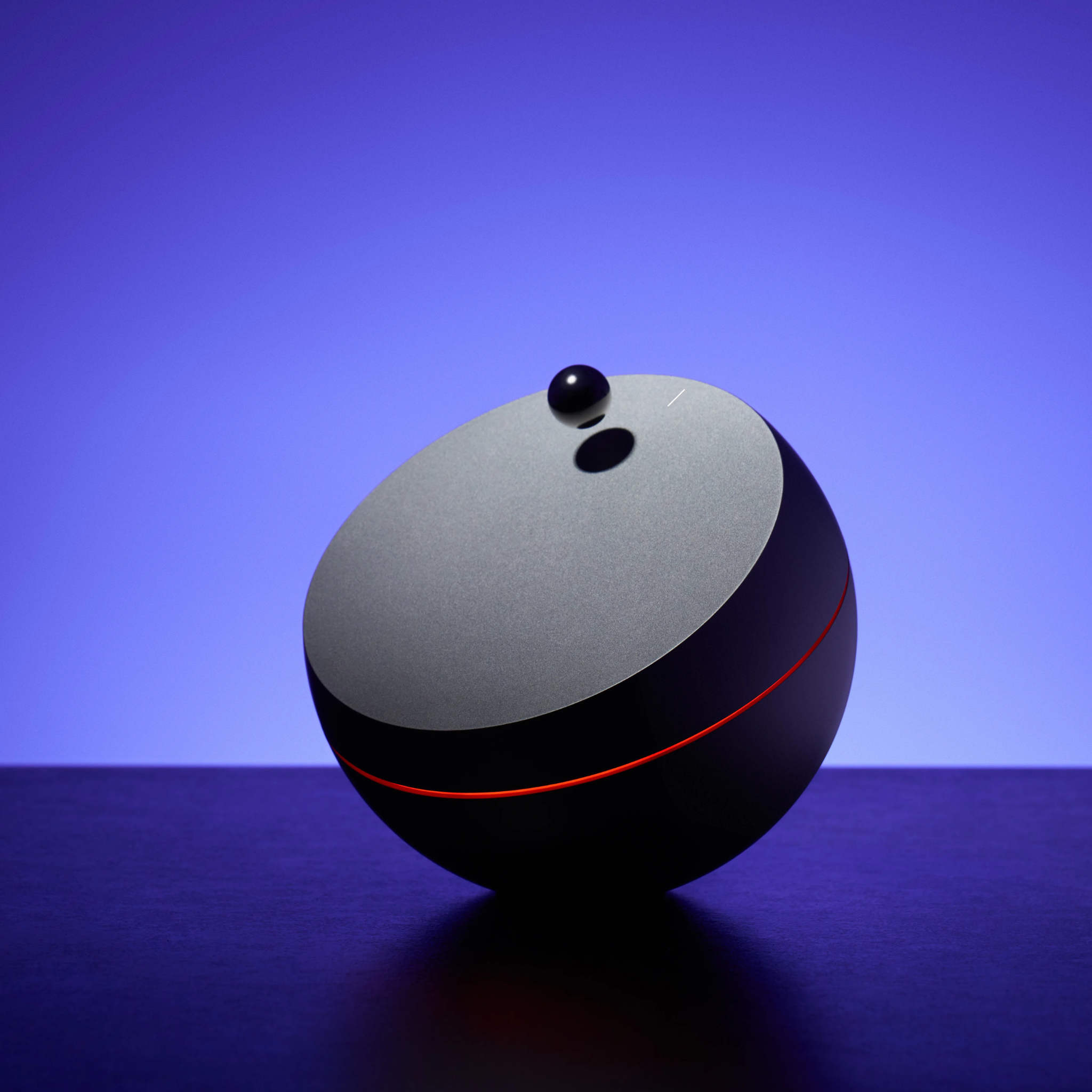
There are no numerals anywhere on it. The time appears on a transparent display in the centre and then fades out, leaving a sphere going round and nothing else. An app switches it between planetary modes, so it can orbit at the rotation speed of Mercury or Jupiter, and you can run the pointer anywhere from a tenth of normal speed to ten times it. It weighs about 900g and has a 5,000mAh battery so it lives on a desk without a cable.
It is $630 in black and $690 in silver. The part we wrote down is that they sell it in pairs: two units for $1,160, or a mixed set at $1,220. Putting a multi-unit tier on a single-product hardware brand is a bold answer to the average order value problem, and on an object bought purely for spectacle it makes complete sense. Nobody was ever going to buy one of these for the utility.
The keyring that holds a message with no battery
A few steps away, Lovebox were showing KEEP, which is the newest thing they make and the smallest. It is a little wooden tag that clips onto your keys with an e-ink screen set into it. Someone sends a note, a drawing or a sticker from their phone, and it appears on the tag.
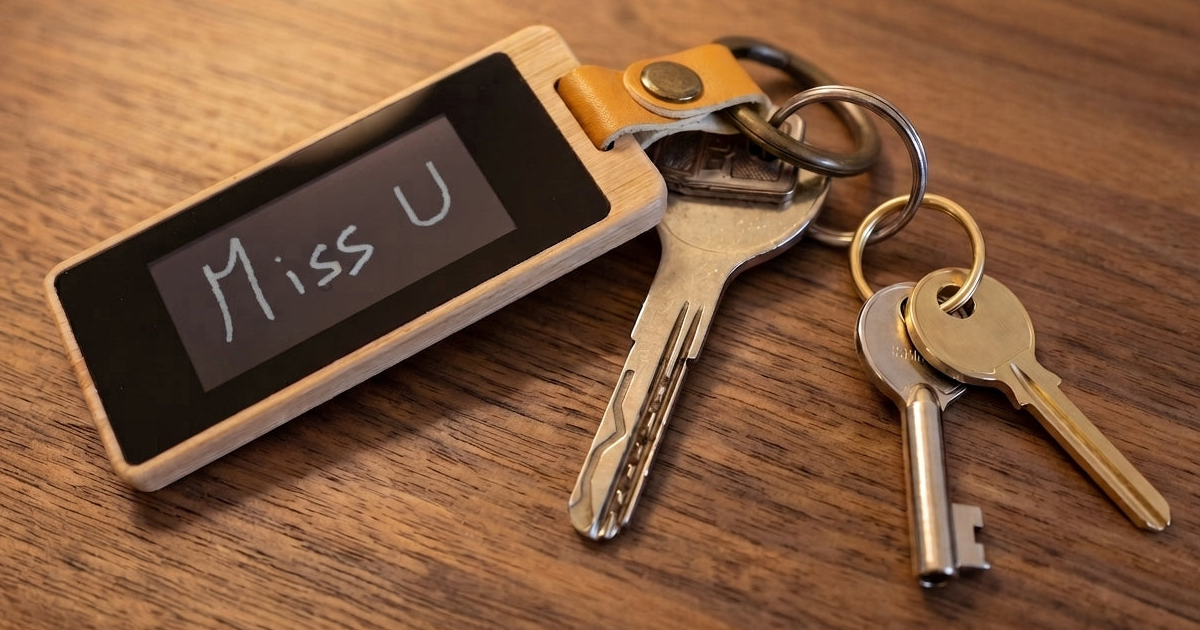
Because the display is e-ink it holds that message indefinitely while drawing no power at all. There is no screen to wake, nothing to charge daily, nothing glowing in your pocket. Someone's handwriting just sits there on your keys until they send the next one. It is $49.99, it had over 2,500 pre-orders by the time we saw it, and it ships in October.
Lovebox have been doing this for a while. The original, a wooden box with a carved heart that spins when a message lands, raised about $293,000 on Kickstarter in 2017 from 2,881 backers against a goal of about $54,000, and has since shipped over 300,000 units into more than forty countries carrying somewhere around 26 million messages. Jean Gregoire built the first one for his fiancée when they were living on opposite sides of the Atlantic, which is the kind of origin story usually invented in a workshop and in this case appears to be simply true.
Here is the part that should make every founder sit up. Nine years and a third of a million units later, they took KEEP back to Kickstarter and deliberately raised a small number: $64,562 from 665 backers. That is not a funding round. That is a market test run by people who know exactly what a market test is worth, and it is the clearest example at the entire show of crowdfunding used as an instrument rather than as a lifeboat.
The other thing worth stealing is what they do around the core product. Engraving, replacement lids, licensed editions with Keith Haring and The Little Prince, a subscription, multi-packs priced so that buying three feels obvious. On a sub-$50 product that range is not a nice extra, it is the difference between a product and a business, and it is why we build the store before the campaign.
Twelve years of going back to Kickstarter
The counterweight to everything else at the show was a Melbourne brand that has been shipping since 2013. Everyone else was showing what they hope to become. Orbitkey were showing what it looks like if it works.
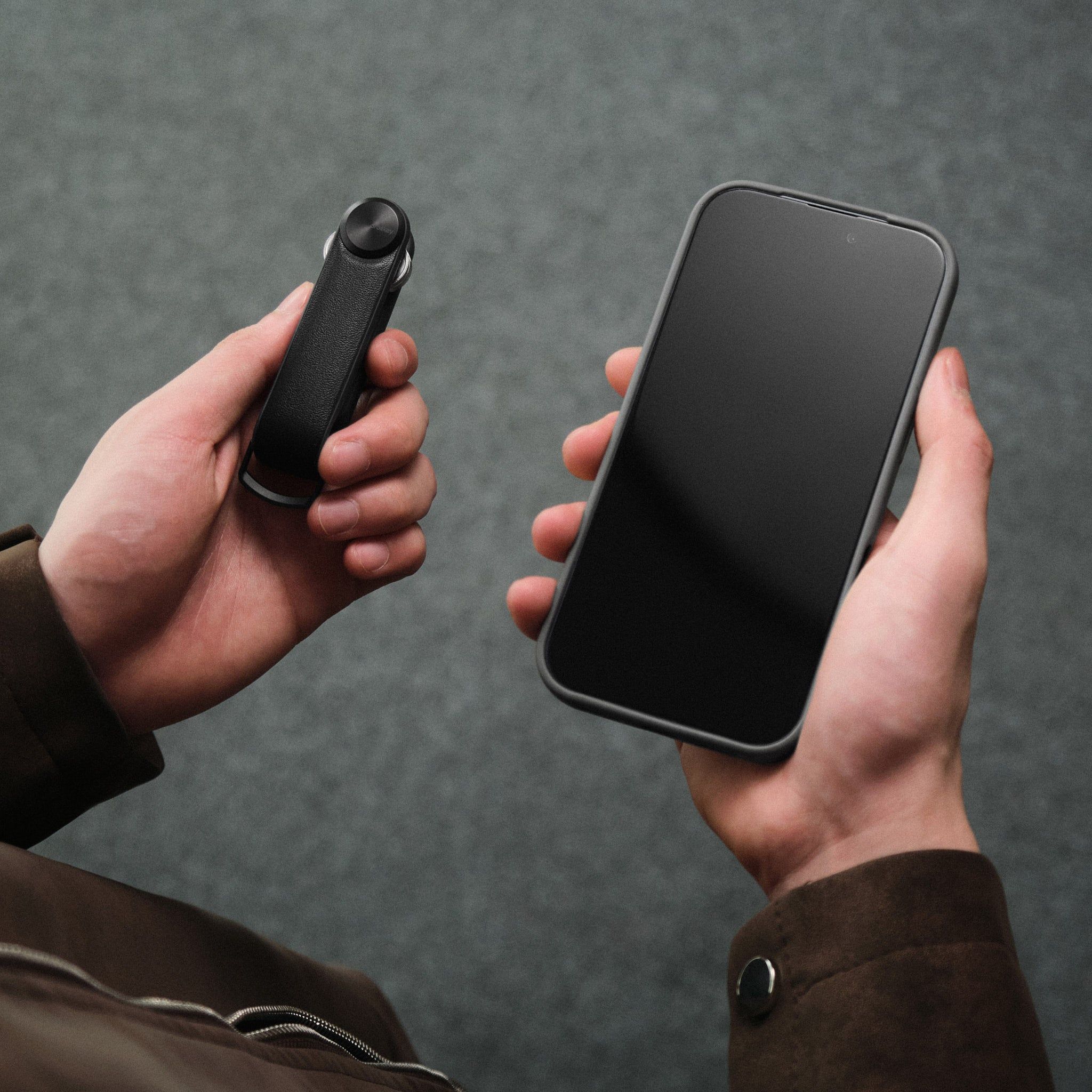
What they brought is small and obvious in the way good products usually are. Rather than clipping a tracker onto your keys as one more lump of plastic, the tracking hardware is built into the band that holds the keys flat. Nothing extra to attach, nothing extra to lose. It is $69.90 in the leather-free version and $84.90 in leather.
Their history is the instructive part. Their first campaign went live in 2013, reportedly on the first day Australian creators could use Kickstarter at all. It hit its A$10,000 goal in sixteen hours and finished around A$210,000 from roughly 5,000 backers. Then they did it again, and again. Across six campaigns they have raised more than $3.25M from over 47,000 backers, and they carried on using Kickstarter long after they could comfortably have paid for the tooling out of cash flow.
That is the thing most founders get wrong about crowdfunding. It is not only a way to raise money you do not have. It is the cheapest market test in consumer hardware, and a B Corp with warehouses on two continents still finding it worth running is the strongest argument for it we can point at.
The dive computer that lives in the glass
AREX ONE is a scuba mask with the dive computer built into the lens. Not strapped to your wrist, not clipped to a hose. A transparent waveguide in the glass puts depth, time and your no-decompression limit into your field of view while you are looking at the reef.
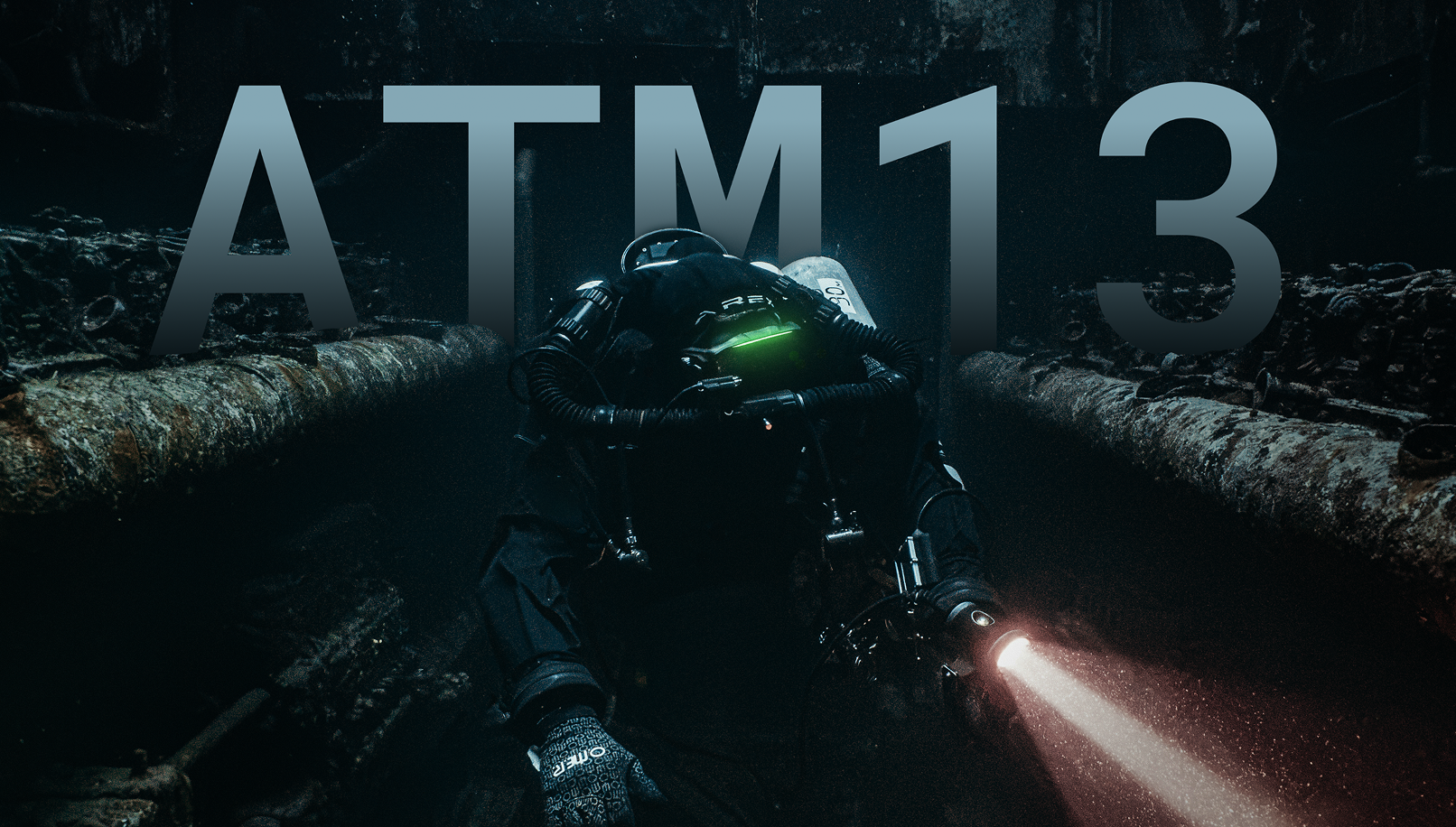
Anyone who dives will understand immediately why this matters. Taking your eyes off what is in front of you to check a wrist computer is the single most routine distraction in the sport, and at depth, in a wreck, in low visibility, routine distractions are how incidents start. Putting the numbers where the diver is already looking is not a gimmick, it is the whole point.
What we noticed is a product that has correctly understood how expensive its own certification is going to be and is building the audience now rather than after. Safety-critical kit for a devoted, high-spending, tightly networked community is close to the ideal crowdfunding shape: the backers already know each other, they already argue about gear online, and they will happily wait for something nobody else makes. It is also exactly the kind of product that sells badly through general retail and brilliantly direct.
Two more that are worth watching
Olares are building an open-source personal cloud operating system for local AI. The idea is that you run agents and language models on hardware you own, in your house, rather than renting them from a company that can change its terms whenever it likes. Olares One is the box. The software is open.
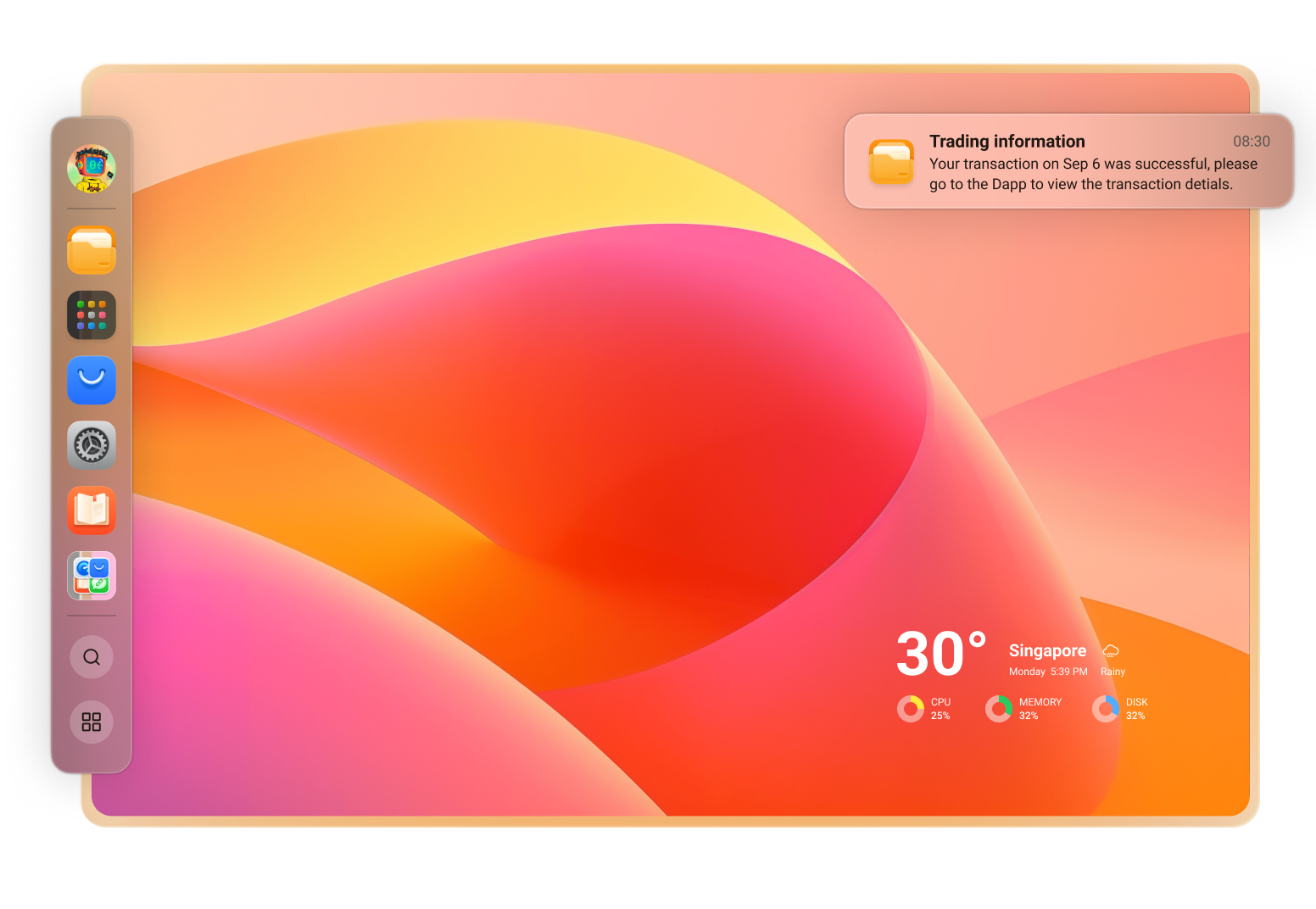
The reason we think this is interesting has nothing to do with the specifications. It is that the positioning is a bet on where public feeling goes next. Right now, most people are relaxed about their work and their documents living on someone else's computer. If that changes, and we think it will, a product whose entire pitch is that nothing leaves the building becomes very easy to sell. Being early to a position is a strategy. Being early to a market is usually just expensive.
HaptonTech are doing something genuinely hard. They make liquid crystal coatings that create real tactile texture on a smooth glass screen, so you can feel what you are looking at. The technology traces back to Dick Broer, who spent his career at Philips working on liquid crystal displays and became vice president of research there.
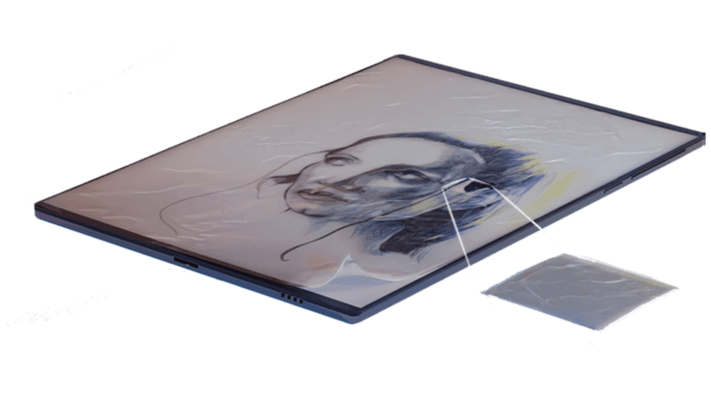
The application that stopped us was not the entertainment one. They are using the same coating to build programmable Braille surfaces, and their claim is that it can be made far cheaper than current Braille hardware. Refreshable Braille displays have been priced like medical equipment for decades. A material science answer that drops the cost by an order of magnitude is worth more than any haptic feedback in a game controller, and it is the kind of thing a trade show is genuinely good for: nobody would have found it looking for it.
The vagus nerve goes consumer
Twelve months ago you could not really buy consumer vagus nerve stimulation. This year ZenoWell were selling it at IFA and winning an award for it, which is usually the last quiet moment before a category gets loud.
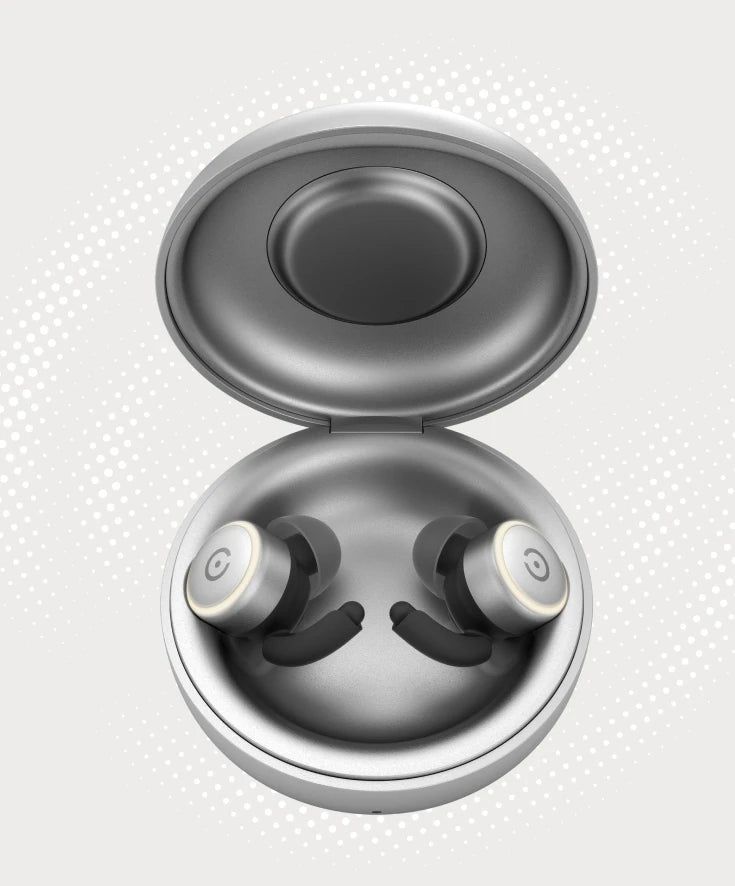
The company came out of Heidelberg University Medical School and builds wearables that apply a mild electrical signal to a branch of the vagus nerve at the ear, aimed at sleep, stress and recovery. Their Zeno One took the IFA Innovation Award for Next and Emerging Technologies outright. The flagship Luna Plus is $439 and the smaller Vita Mini is $239.
What is commercially interesting is that they skipped crowdfunding entirely and went straight to direct pre-order on their own site. When a product has a clinical story and a research institution behind it, that can be the stronger route, because the credibility is already doing the work a campaign page would otherwise have to do. Not every hardware product needs Kickstarter, and knowing which ones do is most of the job.
Whether the science delivers what the category hopes is a question for people better qualified than us. What we can say is that a wellness niche going from nothing to an award winner in a single year is the shape of a market about to get crowded, and whoever owns the language now will still own it in 2028.
What a launch team sees that a visitor does not
Walking a show as an agency is a different exercise. You stop looking at the product and start looking at the machinery around it. Five things stood out over two days, and every one of them is fixable in an afternoon.
Almost nobody had a working email capture. A QR code taped to a wall pointing at a homepage is not a capture. The teams doing it properly had a tablet, one field, and a reason to hand over an address before you walked off.
Where a deposit tier existed at all, it was usually invisible. Two of the best products at the show had a paid reservation live on their own website that nobody standing at the table mentioned once.
The demo almost never answered the first question a backer actually asks, which is never a specification. It is some version of what happens when this breaks, or what happens if you disappear. The few stands that answered that unprompted were noticeably busier.
Very few had a European shipping story, at a show whose entire value to a non-European company is European market entry.
And a lot of genuinely good products had no announced ship date at all. That is the real pattern of IFA 2026 and it is worth saying plainly. The constraint on most of these companies is not engineering. The thing is built. It works. It was being handed to strangers all week. The constraint is everything between a working product and a paying customer, which is the gap we exist to close.
If you are planning around next year's show
IFA sits in the first week of September and that position is the whole argument for it. A campaign that opens off the back of the show lands in the run-up to Christmas. A product that ships in the first quarter lands in the deadest part of the retail year. Those are two very different businesses, and the choice is far easier to make before the stand is booked than after.
Search interest follows the same curve. Interest in the show roughly triples across August and September, then falls to about a fifth of that by December. If the plan is to use the show as an amplifier, the audience has to exist before you get there, because an amplifier multiplies what is already playing and does nothing at all with silence.
In practice that means eight to twelve weeks of pre-campaign work before the doors open. Every company here that had a campaign live within three weeks of the show had already built the list, the reservation funnel and the price ladder before they flew to Berlin. That work is scheduled backwards from the show date.
If you have the finished product and no launch
That was the position most of the good half of IFA was in, and it is the position Blazon was built for. We have run 500+ product launches and 300+ crowdfunding campaigns since 2016, raising more than $120M and driving over $250M in client sales, most of it in consumer hardware. We are the only full-service agency that takes a product through the entire arc: the pre-campaign audience build, the Kickstarter or Indiegogo campaign itself, and the store that carries it on afterwards.
Full launch programmes start at $40,000, with a minimum engagement across all services of $15,000. We turn down roughly 80% of what comes to us, usually because the timing is wrong rather than the product, and we say so on the first call rather than the third. Most of what we take on is consumer hardware.
If you exhibited this year and came home with a folder of business cards and no plan for them, that is the most common outcome of a trade show and it is entirely fixable. Talk to us about launching it and send the product, the market you want and the date you intend to be selling by.
Frequently Asked Questions
When is IFA 2027?
IFA 2027 runs from 3 to 7 September 2027 at Messe Berlin, confirmed on IFA's own current branding. Exhibitor registration typically opens around ten months ahead, so a company planning to launch around the show should be committing by late autumn 2026 and starting audience work by early summer.
What was the best product at IFA 2026?
Among the things you cannot buy yet, the two that impressed us most were datum.coffee, a connected espresso platform that pulls the roastery's own recipe from a photograph of the bag, and Violoop, a palm-sized box that plugs into an existing computer and operates it. In the official awards, ZenoWell's Zeno One took Next and Emerging Technologies.
Which IFA 2026 products are crowdfunding?
Violoop opened on Kickstarter ten days after the show at $399 against a $699 retail price. datum.coffee has a Kickstarter planned for late 2026 and is taking $3 passes in the meantime. Lovebox ran a deliberately small $64,562 campaign this year as a market test. ZenoWell skipped crowdfunding and went to direct pre-order.
Is IFA or CES better for launching a hardware product?
They do different jobs. CES in January is larger, pulls more United States press and retail buyers, and suits a product aimed at American distribution. IFA in September is the stronger European show and sits closer to Christmas retail. Search interest reflects it: CES draws roughly five times the volume of IFA in the United States, while IFA is searched more in the United Kingdom than in the United States. If Europe is the target, Berlin gives you more.
How far in advance should you plan a launch around a trade show?
Eight to twelve weeks of pre-campaign work before the show, and that is the compressed version. Every company at IFA 2026 with a campaign live within three weeks of the show had built the audience, the reservation funnel and the price ladder before they arrived. A show amplifies demand that already exists rather than creating it.
Do trade show awards actually help a product launch?
They help most as campaign material rather than as coverage in their own right. An award announced in the week of the show, then used as the credibility anchor on a campaign page that opens days later, is worth far more than the press the award itself generates. An award nobody turns into launch assets is a plaque.